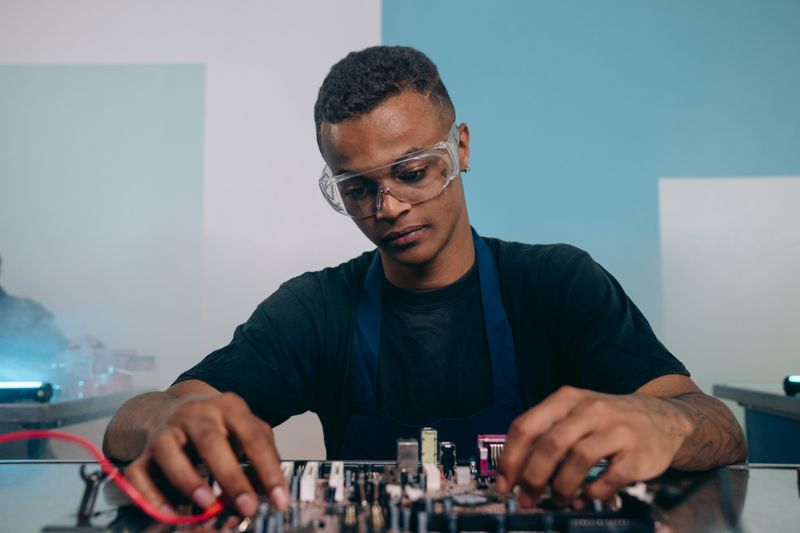
AI for Robotics
Lab autonomy often fails in the field
Lighting changes, layout drift, sensor noise, latency budgets, and safety constraints break demos. We engineer perception, navigation, and control for production conditions — not staged videos.
Perception under noise
Dust, glare, occlusion, and domain shift crush models trained only on clean datasets. We design for sensor fusion and continuous evaluation.
Edge latency & power
Cloud round-trips are too slow for closed-loop control. Models must meet hard latency and thermal budgets on Jetson and custom SoCs.
Integration risk
Vision, planning, firmware, and fleet software rarely ship as one product. We own the stack from ROS nodes to operator dashboards.
Safety & human proximity
Cobots and AMRs share floors with people. Zones, failsafes, and monitoring are engineered in — not bolted on after go-live.
Sim-to-real gap
Simulation accelerates iteration only if scenarios match the site. We close the loop with synthetic data, HIL, and field telemetry.
Fleet & drift
One robot is a prototype. A fleet needs monitoring, model updates, and layout resilience as the warehouse or line changes.
From lab prototype to field deployment
Instead of demos that only work in controlled environments, we help organizations ship perception, navigation and control systems that survive production conditions.
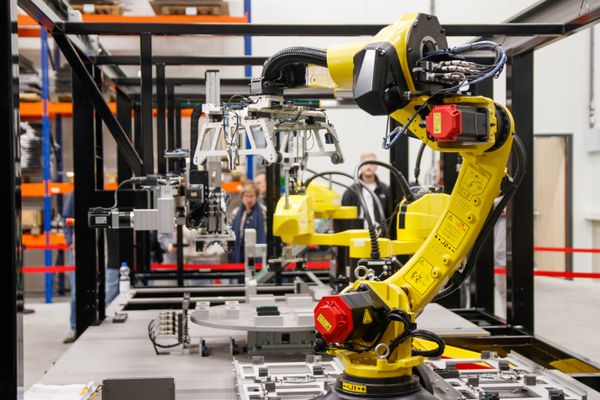
Computer Vision & Perception
Real-time sensing pipelines that let robots see, classify and react in dynamic environments.

Navigation & SLAM
Localization and mapping systems for mobile robots operating in warehouses, factories and outdoor sites.

Motion Planning & Control
Algorithms that translate perception into safe, precise movement for arms, AMRs and autonomous vehicles.
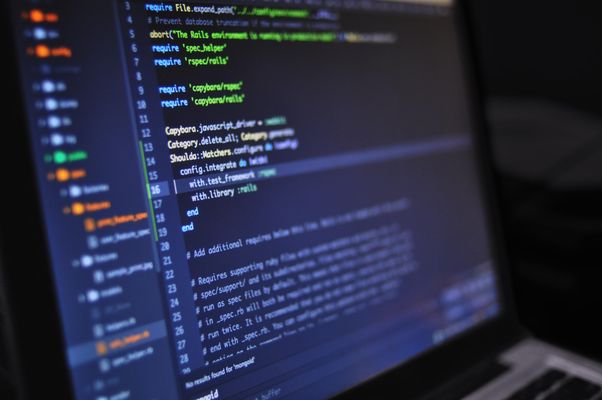
Edge AI & Embedded Inference
Models optimized to run on constrained hardware with low latency and predictable power budgets.
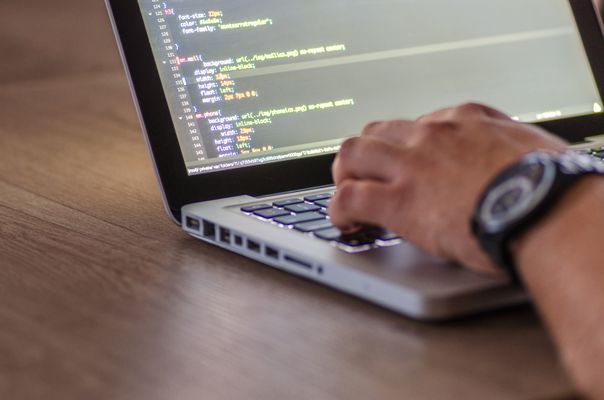
Simulation & Digital Twins
Validate autonomy stacks in simulation before expensive field trials and hardware iterations.

Human-Robot Interaction
Interfaces and safety systems that let humans and robots collaborate on the same factory floor.
Applications by industry
The same core stack — perception, planning, edge inference — adapted to the physical constraints of each domain.
Manufacturing
Vision QC, cobot assist, and in-line inspection that keep up with takt time.
- Defect detection & classification
- Pick-and-place with force control
- Assembly verification
- Safety zone monitoring
- PLC / MES integration
- Operator alert dashboards
Logistics & Warehousing
AMR navigation that survives layout changes and peak-season chaos.
- Visual / LiDAR SLAM
- Dynamic path planning
- Fleet coordination
- Docking & charging logic
- Obstacle & pedestrian avoidance
- WMS / fleet software hooks
Agriculture
Outdoor perception for rows, crops, and obstacles — entirely on the edge.
- Crop-row detection
- Weed / anomaly spotting
- GNSS + vision fusion
- Terrain-aware navigation
- Jetson field deployment
- Ruggedized sensing pipelines
Inspection & Field Ops
Mobile and fixed systems for sites where people should not do every check.
- Infrastructure inspection
- Thermal / RGB anomaly detection
- Autonomous patrol routes
- Remote operator takeover
- Telemetry & incident packs
- Offline-capable edge stacks
A layered stack from sensors to operators
We design clear boundaries so perception, planning, and control can iterate without rewriting the whole robot.
Sensing
- RGB / depth / stereo
- LiDAR & IMU
- Calibration & sync
- Driver & ROS bridges
Perception
- Detection & segmentation
- 3D / multi-sensor fusion
- Tracking & state estimate
- Edge-optimized models
Autonomy
- SLAM & localization
- Planning & control
- Safety supervisors
- Mission / task logic
Operations
- Fleet & telemetry
- Operator UI / HRI
- OTA model updates
- Monitoring & eval
Built on modern robotics and AI stacks
Frameworks & Middleware
 ROS 2
MoveIt
Nav2
ROS 2
MoveIt
Nav2
 Isaac ROS
Perception & ML
 PyTorch
 OpenCV
YOLO
NVIDIA Jetson
OpenCV
YOLO
NVIDIA Jetson
Simulation
Isaac Sim
Gazebo
CARLA
Unity Robotics
Hardware Platforms
Stacks robotics teams already trust
ROS 2 middleware, NVIDIA Isaac / Jetson for edge, OpenCV and PyTorch for perception — plus simulation before expensive field time.
ROS 2NVIDIA JetsonIsaac ROS / SimPyTorchOpenCV Python
 C++
C++ Docker
From concept to autonomous operation
Use-Case Discovery
Map operational workflows, safety constraints and success metrics before selecting sensors, platforms or model architectures.
Simulation
Validate perception and navigation logic in simulation with synthetic data.
Edge Optimization
Train, evaluate and compress models for target hardware with defined latency budgets.
System Integration
Integrate perception, planning and control into the full robotics stack — ROS nodes, firmware, cloud telemetry and operator interfaces.
Field Validation & Continuous Improvement
Test in real operating conditions, monitor model drift and iterate with field data to improve reliability over time.
Research-backed robotics engineering
Research-Backed Perception
Joint research partnership with PTIT AI & Robotics R&D Center on applied perception and autonomy.
AI + Embedded in One Team
We combine computer vision and ML expertise with firmware and real-time systems — not separate vendors.
Edge-First Engineering
Models are designed for deployment on Jetson, custom SoCs and constrained hardware from day one.
NVIDIA Ecosystem Experience
Recognized NVIDIA Ambassador with hands-on experience across Isaac, TensorRT and accelerated inference pipelines.
Outcomes, not just deliverables
Illustrative case studies — to be replaced with verified client results.

Computer Vision QC Deployed Across 3 Factory Lines
Deployed a real-time defect-detection model across three production lines for a manufacturing client, integrated with existing PLCs and operator alerts.
Read case study →
Warehouse AMR Navigation for Dynamic Inventory Layouts
Built a visual SLAM and path-planning stack for autonomous mobile robots operating in a warehouse with frequently changing layouts.
Read case study →
Perception Stack for Autonomous Farm Equipment
Developed crop-row detection and obstacle avoidance for autonomous farm machinery running entirely on edge hardware in outdoor conditions.
Read case study →